


Series II: Toxic Workplace Woes
Episode 3: Recognizing Who is the Favorite
Gossip and Favoritism: Two Toxic Traits That Can Blow Up Your Office Culture
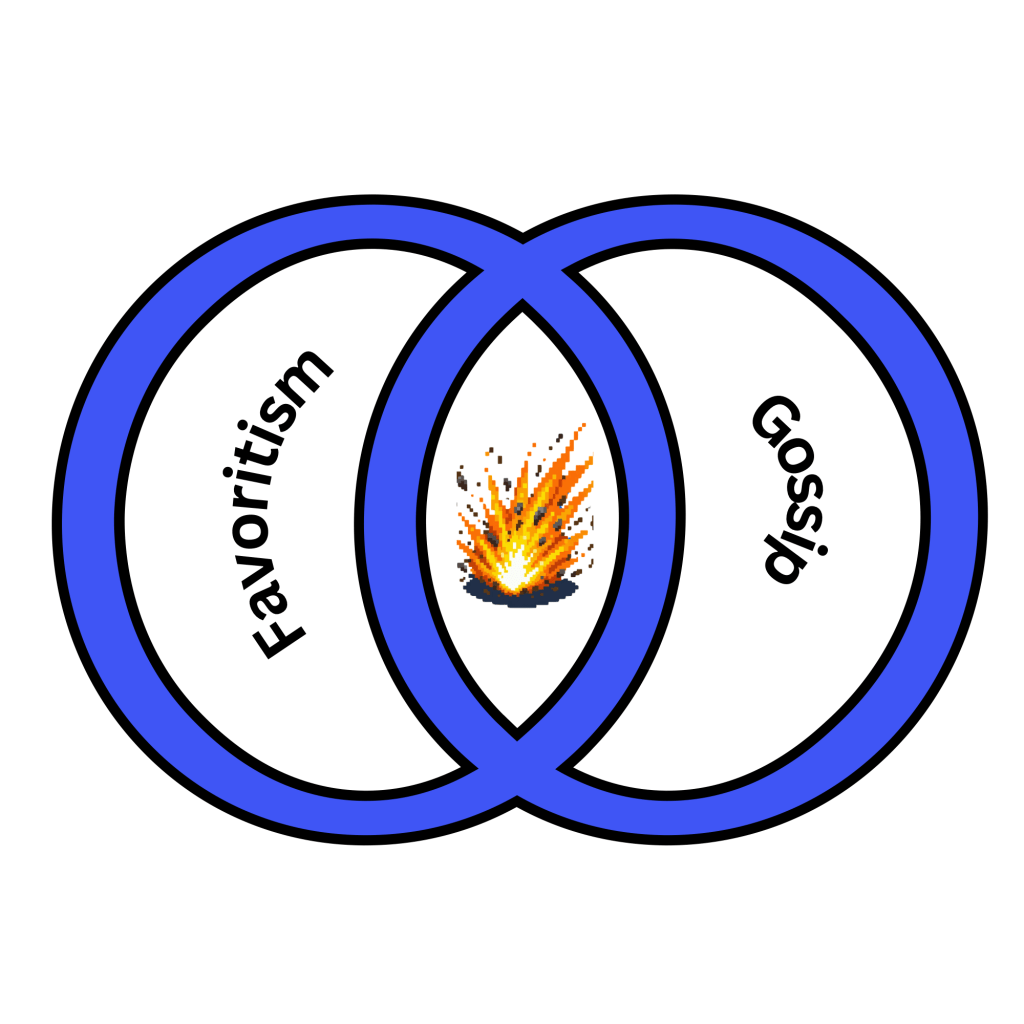
Spoiler: they’re not separate problems. They’re roommates.
By: Becky Johnson, Consultant
Office gossip and favoritism look like two different issues, but they’re actually locked in a chicken-and-egg death spiral. Does favoritism create the gossip, or does the gossip create the favoritism? Nobody knows. What we do know is they rarely show up alone — favoritism and gossip travel together like a manager and their inexplicably promoted golf buddy.
Let’s look at each one on its own first. Then you can see why they are so attracted to each other.
Favoritism: The Open Secret Everyone’s In On
Here’s the part that should really sting: 9 in 10 employees say they’ve personally observed workplace favoritism. That’s not a rare office villain — that’s basically everyone, watching the same show, just with a different lead actor depending on the building.
And a full 56% of executives will straight-up admit, in a survey, with their name presumably attached to a job title, that they play favorites when deciding who gets promoted. Of that group, 96% said they’d promote their favorite over someone with objectively stronger communication skills. Communication skills — you know, the thing that is supposedly the entire job description of being a leader — overruled instantly by vibes and a shared enthusiasm for the same fantasy football league.
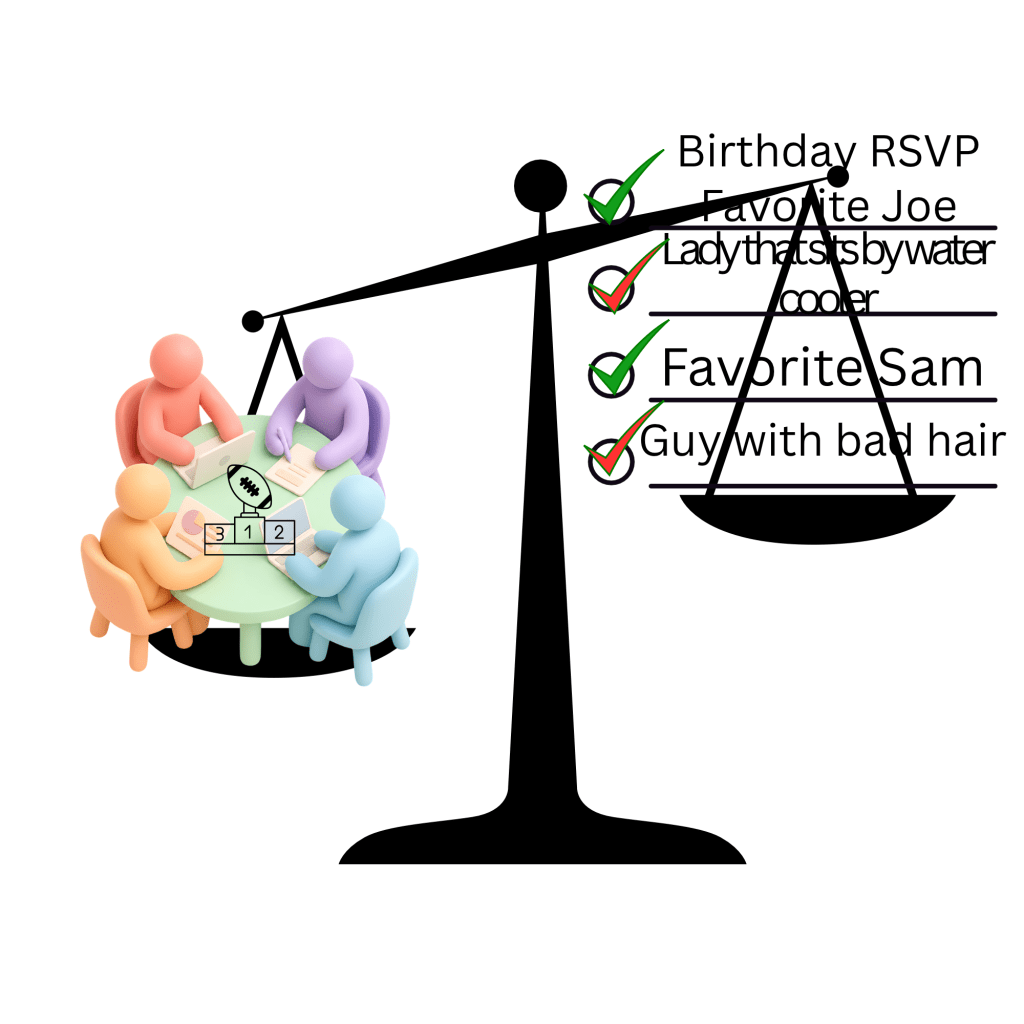
The biggest winners of this system are, shockingly, the people with a personal relationship to management — not the people doing the best work. Meanwhile, 47% of employees say their manager has an obvious favorite, which means nearly half the workforce is currently doing quality work while quietly ranked somewhere between “the favorite” and “whoever RSVP’d yes to the birthday lunch.”
So how do you actually spot favoritism? There are two flavors. The first is merely corrosive; the second can get a company sued.
Flavor one: mildly unethical, extremely deflating.
This is the leader who has noticeably more informal chats with certain employees — inside jokes, non-work banter, the kind of easy rapport that makes an outsider assume they must hang out on weekends. It can also look more official: one-on-ones about a project, followed by that same information mysteriously reappearing in a team meeting or the dreaded group email, credited to whoever got the private preview. It shows up, too, in who gets showered with praise for a job well done and who gets a curt “thanks” for the exact same job, done the exact same way. None of this typically creates legal liability. It just quietly wrecks morale, one Slack emoji reaction at a time.
Flavor two: the kind HR actually has to care about.
This is when favoritism starts steering real decisions — who gets the plum assignment that happens to line up perfectly with the favored employee’s job description, who gets the lighter workload, who gets the shot at the promotion. (How many times have you asked for a new office chair and gotten someone else’s hand-me-down, while the favorite got one still in the box?) It’s especially dangerous when it starts overriding policy — when one person gets quietly waved through for something another employee receives a disciplinary. That inconsistency is exactly what discrimination claims are made of.
Nearly half of employees admit they’ve felt pressured to be extra agreeable with a manager specifically to counter the favoritism they see happening around them — which is the very polite corporate way of saying “I started laughing harder at his jokes so I wouldn’t get iced out of the next promotion cycle.”
The fallout is measurable, and it’s not small: 60% of employees say their job satisfaction has taken a real hit because of favoritism, 49% feel their career opportunities have been outright stunted, and roughly 1 in 10 have quit a job over it entirely. Not “vented about it to a friend” — quit. Filled out the exit paperwork, quietly left “personal reasons” on the form, and walked away from a job because the promotions were being decided on vibes.
Gossip: The Load-Bearing Wall Nobody Wants to Admit Is Load-Bearing
Gossip is not background noise. At this point, it’s basically structural. 58% of employees hear gossip weekly, and 30% hear it daily — which means for nearly a third of the workforce, gossip isn’t “occasional office drama,” it’s more of a recurring calendar invite nobody actually sent. And most of it happens in the break room, which really makes you reconsider every time someone casually invites you to “grab a coffee real quick.”
It’s also not harmless chatter about someone’s weekend. 55% of workplace gossip is specifically about a colleague’s performance and their shot at a promotion — meaning gossip isn’t a distraction from the favoritism problem, it is the delivery mechanism for it. And here’s the genuinely unhinged stat: 72% of employees say they’ve witnessed gossip that directly damaged a co-worker’s professional reputation. That’s not “did you hear what Karen wore to the holiday party.” That’s a career getting quietly dismantled over a sandwich.
This isn’t just an office-culture inconvenience, either — there’s actual research on what negative gossip does to people, and none of it is flattering for anyone involved. Studies link workplace gossip directly to reduced psychological well-being and lower organizational self-esteem, largely because being gossiped about — or just suspecting you might be — creates a chronic, low-grade feeling of exclusion. Basically: your brain does not distinguish “I wasn’t invited to that meeting because of scheduling” from “I wasn’t invited to that meeting because I’m not in the club.” It treats both like a threat, and reacts accordingly.
And the trust damage doesn’t stay contained to the person being talked about. 47% of employees say gossip fuels tension and distrust across the whole team, and 47% say they no longer trust their co-workers with anything confidential. Once that trust is gone, collaboration turns into a performance — people share the bare minimum, cover themselves in writing, cc everyone on everything “just to be safe,” and stop assuming good faith. Which, conveniently, is exactly the environment where more gossip thrives. It’s a closed loop with no exit ramp — and everyone involved swears they’re just “keeping people in the loop.”
A small, fairness-minded footnote: not all gossip is negative.
Gossip can include celebrating someone’s win — “Did you hear Lou got the promotion? He really earned it” or “Mary’s son got engaged, how exciting.” This variety exists. It is, unfortunately, the rare exception rather than the rule.
So before you believe what you hear — or worse, repeat it — run it through this quick gut check:
- Is the conversation focused on something negative, or on enjoying someone else’s misfortune? Gossip.
- Would you be comfortable saying this with the subject standing right there? If not — Gossip.
- Could the story hurt someone’s reputation, personally or professionally? Treat it as Gossip.
- Did you get this secondhand — hearsay, or overheard — rather than directly from the person involved? Gossip.
- Even if it came straight from the source, did they actually say you could share it? If not — still Gossip.
This isn’t a hidden problem leadership can plausibly claim ignorance. Employees can feel, with unnerving precision, exactly who’s in favor and who isn’t — they just rarely have the receipts to prove it, which is precisely what makes it so maddening. You can’t file an HR complaint about a “vibe.” You can’t write “he only takes my ideas seriously when Chad says them first” into a formal grievance and expect anyone to open an investigation. So it festers, unspoken, while everyone quietly keeps score in a spreadsheet only they can see.
The Fix Doesn’t Require a Rope Course
None of this needs a “culture reset” offsite with trust falls and a rope course. It just requires:
- Transparent promotion criteria — if the bar for advancement isn’t written down and consistently applied, “favoritism” isn’t a glitch in the system. It is the system.
- Decisions made in rooms everyone can see — informal backchannel decision-making is where favoritism quietly lives; drag the decision into daylight and it gets a lot harder to hide.
- Leaders who notice their own blind spots — it’s genuinely possible to like someone personally and still not fast-track their promotion. That distinction has to be actively maintained, not assumed.
- Fewer whisper networks, more actual communication — a lot of gossip fills a vacuum left by leadership simply not explaining decisions. Explain the decision, and you remove most of the appeal of speculating about it over coffee.
- Consequences for gossip that damages someone’s reputation — not “no talking at work, ever,” just an actual standard, applied evenly, including to the people currently benefiting from the way things work now.
Favoritism and gossip don’t feel like “real” toxic behaviors, not the way screaming in a meeting does. They’re quieter. Which is exactly why they’re so effective, and exactly why nobody ever puts them on a slide in the all-hands. But ask anyone who’s watched a less-qualified coworker get the promotion they were quietly, informally promised months ago, and they’ll tell you: this is the stuff that actually wears people down.
Data sourced from workplace favoritism and gossip research, including studies referenced via SHRM, Gallup, and industry workplace-culture surveys (2024–2026).

Next up in the series: the void where recognition should be, and why “great job, team!” in a company-wide Slack channel is not, in fact, a form of payment.


Leave a comment