Series II: Toxic Workplace Woes
Episode 7: The Gold-Plated Band-Aid: You Can’t Pay Your Way Out of This
The raise that shows up right where the real problem is hiding, and the very expensive reason it’s so hard to peel off.
By: Becky Johnson, Consultant
Picture a workplace with a gaping, infected wound in its culture. Disrespect in the hallways. A manager who treats “feedback” as a spectator sport. A team quietly rehearsing resignation speeches in the parking lot. And then one day an employee finally says the quiet part out loud: “I’m thinking of leaving.”
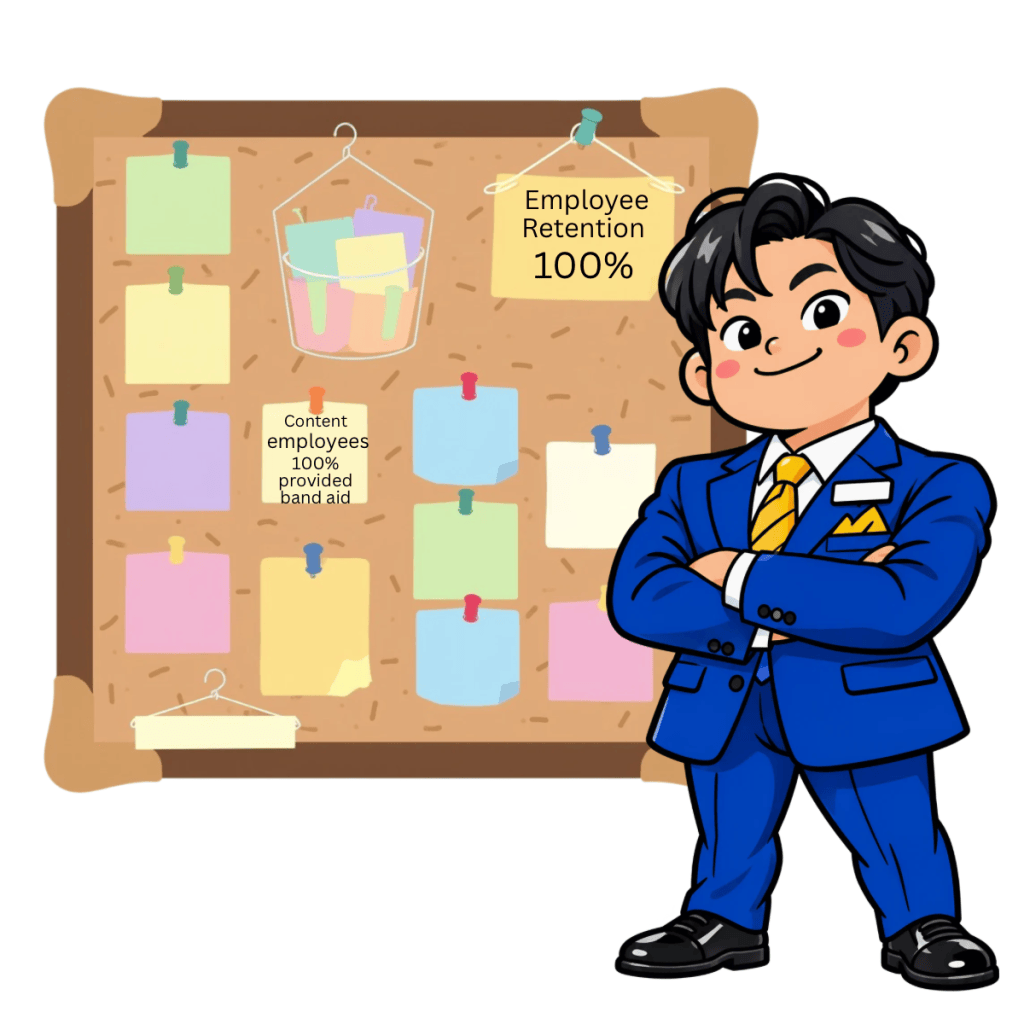
The organization’s response? Not “what’s wrong?” but “what number would make this go away?” A raise. A retention bonus. A shiny, gold-plated Band-Aid, pressed over the wound with a confident “that should hold.”
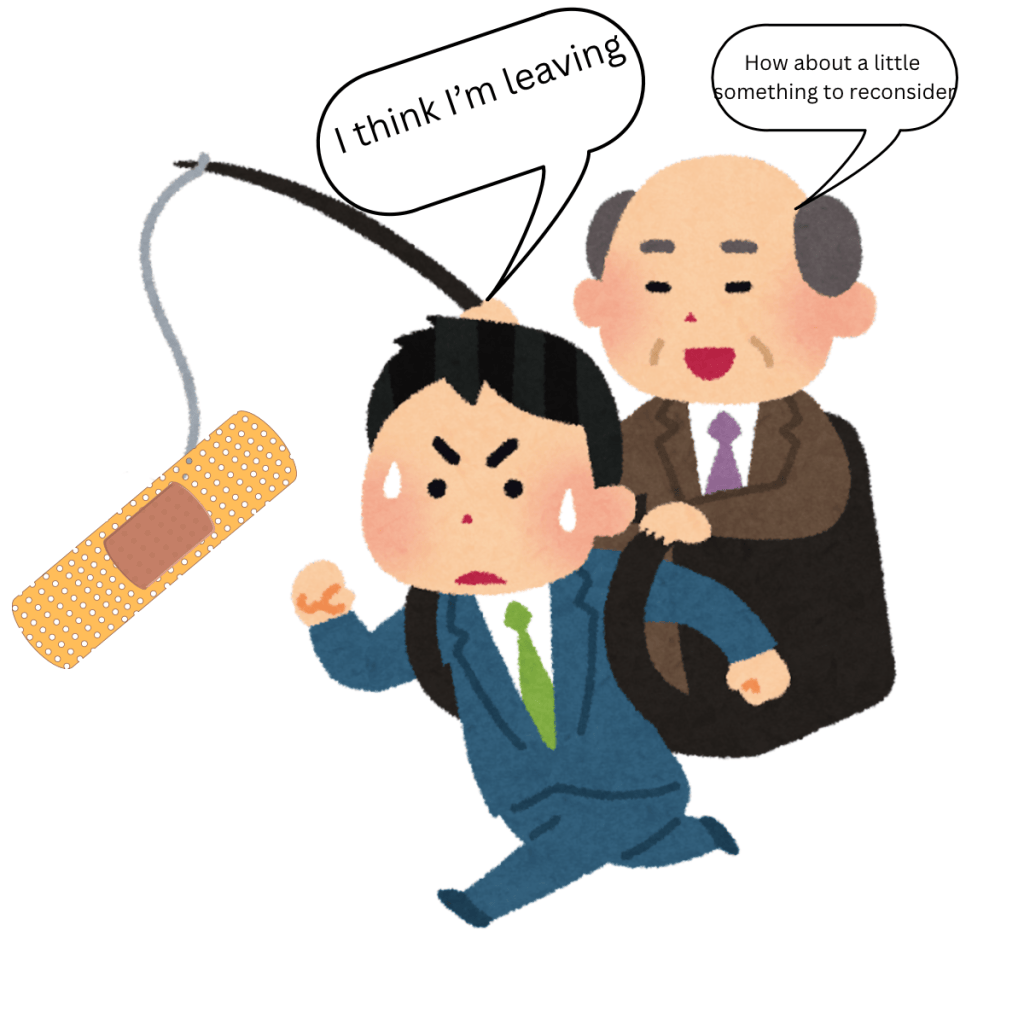
It will not hold. And here’s the part nobody puts in the offer letter: the better the Band-Aid pays, the harder it gets to peel off.
The Triage Report
Let’s start with the number that makes finance teams reach for the smelling salts. Gallup tracks why U.S. employees leave their jobs, and as of 2024, pay and benefits was the most common single reason, but it was named only 16% of the time. When Gallup grouped all the individual reasons into broader themes, engagement and culture (37%) and wellbeing and work-life balance (31%) came out on top, together accounting for 68% of exits. Pay got a solid, respectable showing in a very crowded waiting room.
Other recent surveys point the same direction. iHire’s 2026 Toxic Workplace Trends Report found that 68.9% of employees have worked for an employer they considered toxic, and 47.6% have quit a job because of a toxic environment. And in Monster’s 2025 Revenge Quitting Report, 47% of workers had abruptly quit a job, with toxic or disrespectful culture (32%), poor leadership (31%), and feeling undervalued (23%) cited more often than low pay.
A fair-minded footnote, because we respect facts here: pay is not irrelevant. In an October 2025 Remote.co poll of more than 3,000 U.S. employees, low pay or inadequate benefits (70%) edged out toxic or misaligned culture (69%) as the top reasons for turning down a job offer. But once people were already inside, 74% said a toxic culture would make them quit or seriously consider it, compared with 57% for low or unfair pay. Pay gets people in the door. Culture decides whether they stay in the building.
The Painkiller Prescription
Here’s the instinct behind the gold-plated Band-Aid: pain is inconvenient, so numb it. A counteroffer is the corporate version of reaching for the strongest painkiller in the cabinet when the problem is a fracture.
And employers reach for it constantly. A 2026 Robert Half survey of 500 Australian hiring managers (reported by the Australian Computer Society in June 2026) found that 85% had made a counteroffer to an employee holding another job offer. The results were not a ringing endorsement: less than half said the employee ultimately stayed, nearly one-third said the worker left within a year despite accepting, and just under 10% said the employee rejected it outright. About 20% acknowledged a counteroffer is a temporary fix that doesn’t address why the person wanted out in the first place. A note on scope: this is an employer-reported survey from Australia, but the pattern is the point.
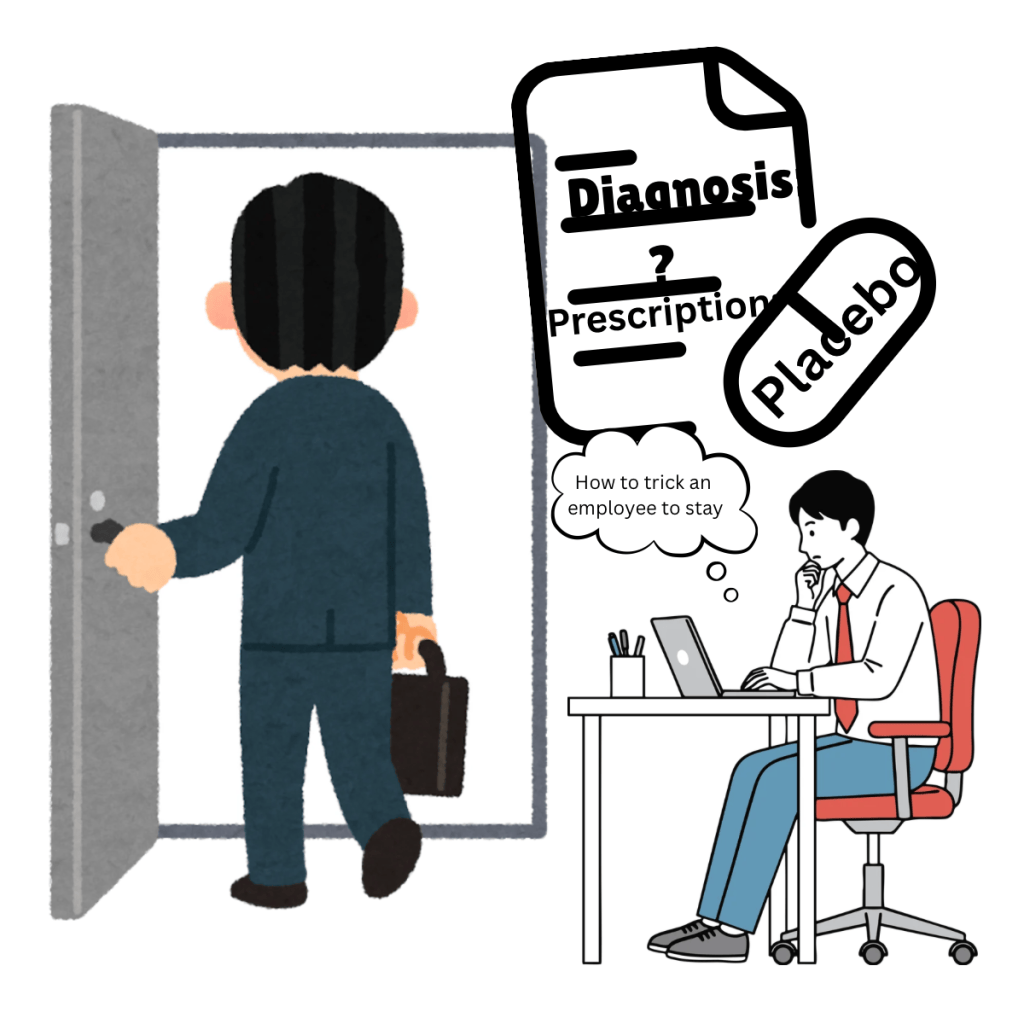
Meanwhile, Gallup found that 42% of voluntary leavers said their manager or organization could have done something to prevent their exit, and 45% said that in their final three months nobody in leadership proactively talked with them about their job satisfaction, performance, or future. (Gallup surveyed these leavers in late 2023 and published the findings in July 2024.) Notice what’s missing from that picture: a diagnosis. The patient got a prescription before anyone asked where it hurt.
Stuck to the Gold Plating
Now the part that rarely makes it into the retention strategy deck. A big enough raise doesn’t just fail to heal the wound. It can make the employee unwilling to leave the room.
Monster’s job-hugging survey, fielded in September 2026 among 1,005 employed U.S. workers, found that 48% are currently “job hugging,” meaning they’re staying put even if they feel disengaged, unhappy, or underpaid. Asked why they stay, 66% cited pay and benefits and 64% cited job security or stability. Among workers who received a new opportunity in the past year, 40% passed on it to stay where they were. And the cost is showing: 31% say job hugging makes them less satisfied or feel stuck, up from 27% a year earlier. The restraints are comfortable. The wrists are not.
The job market is doing its part to tighten the cuffs. Gallup’s August 2026 reading found that only 30% of U.S. employees say it’s a good time to find a quality job, down from 56% in November 2023. Even so, 53% are watching for or actively seeking a new job. That is a lot of people looking at the exit while their paycheck quietly holds the door shut. A Gartner survey of more than 3,000 employees in December 2025 found more than half had turned down their most recent job offer, up from just 15% two years earlier, and nearly a third said they planned to stay put because of economic volatility even if offered a higher salary elsewhere. Gartner’s analyst warned employers not to mistake this caution for loyalty. When confidence returns, many of these workers will reconsider.
Here’s the cruel mechanic underneath it, and it’s worth saying plainly. Every raise quietly raises the price of leaving. The mortgage adjusts. The lifestyle adjusts. The shiny number starts holding up the house. Then one day the employee looks at the toxic environment, looks at the pay stub, and does the math: how much of my own wellbeing is a fair trade for this? Employers who answer a resignation with a bigger paycheck aren’t just failing to treat the wound. They’re making it more expensive for the person to get away from it.
One more honest note, because we’re not here to pretend money doesn’t work at all. Money buys time. That’s exactly the problem. It buys time for the infection to spread while everybody congratulates themselves on the retention numbers.
The Wound Underneath
So what’s actually causing the infection? In the iHire 2026 report, nearly 8 in 10 employees who experienced a toxic workplace pointed at unethical, unaccountable, or unsupportive leadership, and poor communication from the top came in a close second at 72.1%. Monster’s revenge-quitting data tells the same story from the exit side: toxic or disrespectful culture and poor leadership were the two most common reasons for walking out without notice.
Gallup’s leaver data shows where the daily damage happens. Among preventable exits, about 3 in 10 of the fixes employees named involved their manager: 21% wanted more positive interactions, like listening and communication, and 8% wanted fewer negative ones, like rudeness or micromanaging. Another 22% pointed to organizational issues (13%) or staffing, workload, and scheduling problems (9%). Which is the part of the story where the retention bonus quietly slides out of the room. A one-time payment doesn’t change the person who caused the wound. It just pays you to keep standing next to them.
The Hospital Bill for Ignoring It
Skipping treatment is not the cheap option. Gallup estimates that voluntary turnover costs U.S. businesses about $1 trillion every year. That’s a lot of money to lose over an uncomfortable conversation.
And replacing people isn’t a rounding error either. Gallup estimates the cost of replacing someone at roughly 40% of salary for frontline employees, 80% for technical professionals, and 200% for leaders and managers. Meanwhile, as of August 2026, 53% of U.S. employees were open to leaving their organization. That’s a lot of people with one foot out the door and a very expensive bandage holding the other one in.
Why Everyone Keeps Ordering the Band-Aid
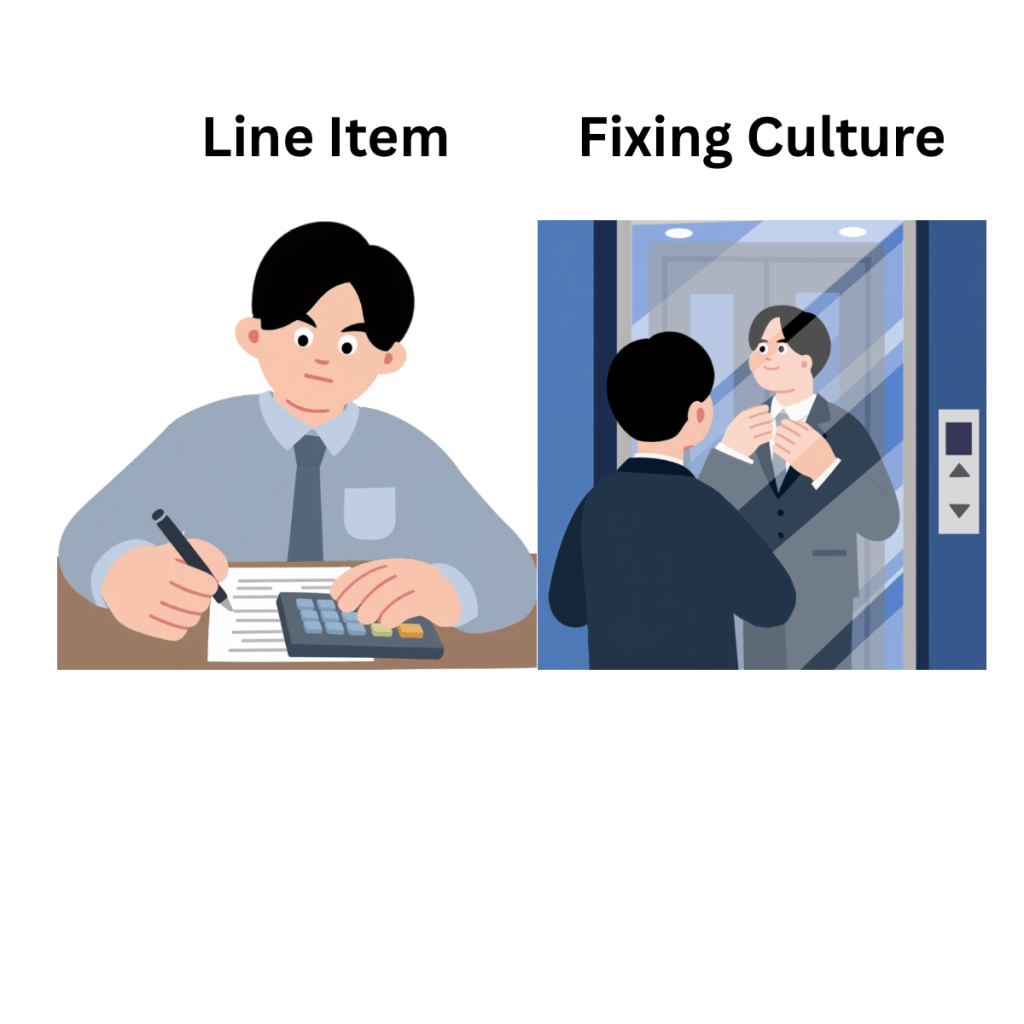
If the data is this clear, why does the gold-plated Band-Aid keep getting restocked? A few likely reasons: it’s easy to approve, it looks decisive, and it doesn’t require anyone to examine their own behavior. A bonus is a line item. A hard look at your management culture is a mirror.
There’s another, quieter appeal, too. A retention payment buys silence. The employee who got the raise stops complaining, at least out loud, and the organization gets to read that quiet as “problem solved.” (See: nearly half of workers job hugging, some of them quietly unhappy about it.)
Gallup’s own read on pay is worth sitting with: compensation and career advancement are closely intertwined markers of whether employees feel valued. Which hints at the real fix. When people ask for more money, sometimes they’re also asking, in the only language the system accepts, “do you see me?”
What Actual Treatment Looks Like
None of this means you should cut anyone’s pay and hand out stickers. It means treat the wound, then pay people fairly. Practically:
- Have the conversation before the resignation letter. Gallup found that when a manager has one meaningful conversation a week with each direct report, employees are four times as likely to be highly engaged, and the conversations can be as short as 15 to 30 minutes. Three months of silence is too long.
- Ask what’s driving the exit before you name a number. A counteroffer that doesn’t address why someone wants to leave is just a more expensive way to postpone the same conversation.
- Talk about pay as part of a bigger story. Review market value regularly and pair it with a real career path. A raise with no future attached is just a more expensive Band-Aid.
- Don’t mistake job hugging for loyalty. Workers staying put because the market is tight are watching the exits. When confidence returns, so will their options.
- Train the people who actually shape daily experience. If about 3 in 10 preventable exits trace back to how managers interact with people, manager development is first aid, not an optional elective.
- Fix the workload and organizational barriers. Nearly a quarter of preventable exits could be avoided by addressing organizational issues, staffing, workload, and scheduling.
- Treat disrespect as a serious symptom. Toxic or disrespectful culture was the most common reason for abrupt quits in Monster’s 2025 data. Respect is free. Ignoring its absence is not.
And if you’re the one wearing the gold plating, a few honest questions are worth asking: Would I accept this job at this pay if the culture stayed exactly as it is, with no raise coming? What number do I actually need, as opposed to the one I’ve grown used to? And what would it cost my health to keep doing the math the other way?
Pay matters. A fair paycheck is the cost of admission. But it was never the whole treatment plan, and handing someone a bonus while the infection spreads isn’t care, it’s cosmetic. People don’t stay because the Band-Aid was shiny enough. They stay because peeling it off got too expensive. That’s not retention. That’s a very well-compensated hostage situation.
Data sourced from Gallup (Employee Retention & Attraction indicator, updated August 2026; employee turnover research, July 2024), iHire (2026 Toxic Workplace Trends Report), Monster (2025 Revenge Quitting Report; Job Hugging Series Vol. 2, September 2026), Remote.co (October 2025), Gartner (December 2025 survey), and Robert Half via the Australian Computer Society (June 2026).

Next up: The Reputation Damage Nobody Budgets For


Leave a Reply